Review: The Jennifer Morgue

February 8th, 2014

I first began reading Stross when a friend literally jammed a copy of Halting State into my hands and told me not to return it until I was done. Halting State was great stuff, and I liked the sequel at least as well.  I recently read one of his Laundry Files short stories, and though I liked it, I wasn’t blown away. I decided to give the Laundry another chance with The Jennifer Morgue.

This time I was blown away.

First the book is just plain fun to read.  There are lots of funny and exciting bits for everyone.  Then there’s all the techie and sci-fi in-references that seem like they’re just for me, but clearly reach a bunch of folks.  If that was all there is, it’s all done so well it would be worth reading.

But second, this book is a perfect critique and deconstruction of the James Bond series of novels, movies, etc. The Bond archetype and exploiting it is a plot point – which is already cool – but the extent to which Stross has thought about and worked through this deconstruction is a lot of fun.  There’s more to it than the characters seem to notice, and catching those points as they go by – as they go by in this witty thriller with a sense of humor – only enhances the fun.

But then the head of that thriller bites into its own tail and becomes an exemplar of the same genre it’s deconstructing while continuing the deconstruction and staying fun.  This is clearly the best thing ever.  And I won’t even mention the gender reversals.

Overall this is a fun thinking man’s thriller told with good humor and heart.

Strongly Recommended.

Review: Furious Cool

February 8th, 2014

David and Joe Henry are Richard Pryor fans of the first order, and even they can’t make his life into a happy story. Furious Cool: Richard Pryor and the World That Made Him, tells the well researched and sad story of Pryor’s rise to become one of the most popular and respected comedians of the late 70’s and early 80’s and his subsequent decline. Though that long title promises some inquiry into the state of the world, Pryor holds center stage throughout.

The Henrys do a good job of describing the depth and honesty that made Pryor, briefly, one of the most dynamic and deep comedians in the world.  I am not a Richard Pryor superfan, but I remember seeing his concert films and realizing that his honesty and comedic chops made him something special.  With a reference or a few words from a bit, the Henrys bring those moments to life and reawaken the possibility of those clear, raw, moments.

Then they have to talk about the relentless drug abuse and lure of big money and bad films that turned Pryor into a has been too soon. It’s hard to decide which is sadder, the personal self-destructive urge to light himself on fire in mid-binge or presenting a shadow of himself in awful film after awful film just to get the money.

Through it all the Henrys keep the narrative moving though the tone can be grim.  There are a few spots than could stand to see more aggressive editing, but overall the book holds your attention keenly and pulls you along.

Recommended.

Review: Cosmic Laughter

February 8th, 2014

What a strange and beautiful world it is in which I get to reread Cosmic Laughter. Laughter is a collection, edited by Joe Haldeman, of light hearted science fiction and fantasy that I first happened on when I was 10 or 12 years old.  I borrowed it on more than one occasion from the Steele Memorial Library in Elmira and read it back to back. Rereading it was more polishing the memories than reading a book.

So, it’s not like this will be unbiased.

Each of the stories has a nice twist to it, or a great setup.  For instance, “Gallagher Plus,” by Henry Kuttner remains one of the great set-ups of all time – man who is a brilliant inventor only when drunk wakes from a bender with a strange machine humming, no money, and a few clues to indicate he’s taken more than one commission – some of whom are already angry.  The execution doesn’t live up to the possibilities, but oh the possibility of it.  Andrew J. Offut’s “The Black Sorcerer of the Black Castle” hits the perfect spot between send-up and homage to R. E. Howard, and Damon Knight’s “To Serve Man” is everything it’s known for.  The best of the lot is Haldeman’s own “Eye of Newton” in which a mathematician summons a demon and uses logic to get out of it.  It’s breezy and just long enough to build up some suspense without overstaying its welcome.

All fun stuff.

Recommended.

Review: One Summer, America, 1927

January 31st, 2014

Bill Bryson has a knack for taking disparate facts and building them into an interesting narrative.  in 1927 he does this with significant aplomb, picking a few larger than life people and watching how their lives and times mesh and unmesh.

1927 is a good year for such a study of America.  It’s the year that Lindberg crossed the Atlantic, that the Yankees fielded perhaps the greatest baseball team ever – led by Babe Ruth, and that’s just the beginning. Bryson is a natural raconteur and he both provides the color commentary on the larger than life protagonists, and he generates the overarching narrative the pulls the whole thing together.

He doesn’t stay completely in 1927, of course.  There are activities that set context for what happens in ’27.  There are activities that have their real repercussions after 1927, though their roots are there.

Along the way Bryson shows us how 1927 reflects our time – show trials and pointless celebrity – and how it differs.  It’s compelling to see how much and how little we have changed as a nation.

Strongly Recommended.

Slippery When Wet

January 31st, 2014

I like to start a few days a week with a 20 mile ride before I get to work.  On Wednesday (29 Jan) I set out to follow the Ballona Creek Bike Path to Redondo Beach and come back.  It’s a ride I’ve done many times.

This morning was very foggy. Coming down the path, it was common to not be able to make out the opposite shore of Ballona Creek.  There were crew teams out rowing in, which surprised me.  I was having a very good ride, though.

The bike path turns left to cross a bridge and as I took that turn, the bike absolutely shot out from under me.  The wheels had both let go of the wet pavement together and the bike slammed me to the ground like it was a mousetrap and I was sitting on the bar.  I’ve crashed before, and often remembered thinking “this is going to be bad” as the accident evolved.  This time I felt my helmet and left side hit the road and thought “that was bad.”  And it was.

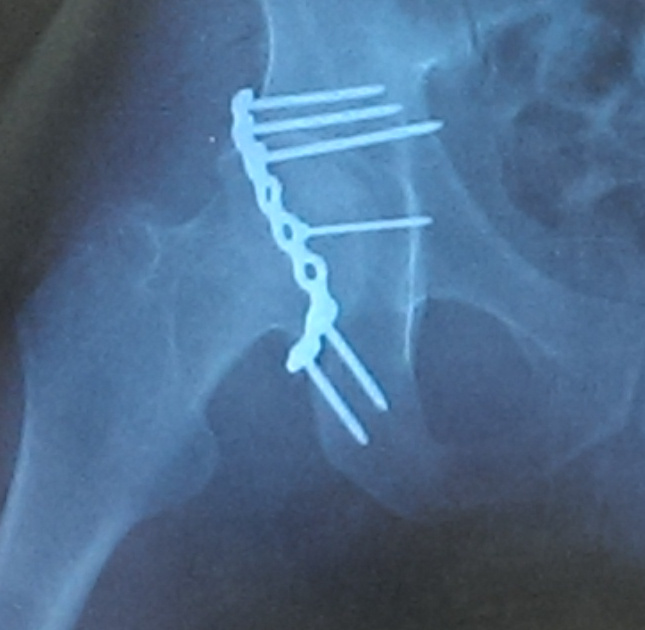
The road rash wasn’t much to speak of, but I had cracked my hip awfully hard.  I managed to stand up, but realized pretty quickly that while my hip would hold me, I couldn’t take a step with it. Shortly afterward a fellow named Allan stopped and helped me get the bike out of the way.  At this point I’m lying on my side on the path.  I fish my phone out and call 911.  And get briefly put on hold.  Apparently lots of accidents happen in the fog.  Eventually we get to an operator who dispatches emergency vehicles (after another hold).

The paramedics arrived and picked me up with care and put me in the Ambulance. We worked out that I was a Kaiser member, and they took me to the closest Kaiser facility.  I’ve never done that little negotiation about where to tale an injured party based on their insurance.  It all worked out, though.

The fine folks at Kaiser ran me through the x-ray machine, and sure enough my hip bone was broken.  Pretty cleanly and in a good spot, but definitely broken.  Looks like we need to fix that. (Incidentally the only upside of breaking your hip at 46 is that everyone says how young you are.  It’s nice to hear.)

So, now I have a pin in my hip to match the one in my ankle on the other side.  I’m practically bionic.

And, surprisingly, it’s Friday afternoon and I’m home with a walker. Both legs will take weight, and I can walk pretty well with the walker, though it definitely hurts and tires me out. The doctors are still talking weeks  of recovery – and I believe them.  But I can walk around my house 2 days after breaking it.  Days of Miracle and Wonder.

Everyone at Kaiser was great, so thank all of you.

And thanks to all my friends who have been sending kind words and offers to help – including teaching my class on Thursday.

Review: Trinity

January 4th, 2014

Jonathan Fetter-Vorm’s Trinity is a history of the development of the atomic bomb told in comics.  It shows off comic’s power in relating history rather than providing escapist entertainment very well.  It’s strengths are comics’ strengths and so are its weaknesses.

The main weakness is that compared to a pure text history of the same subject, there are less technical and historical details.  Everything is told primarily through images, not as text or illuminated manuscript, so details must be thinner.  The content difference is similar to the difference between reading a history and watching a documentary.

The strength is in the power of those images to draw the reader into the narrative.  Fetter-Vorm does a great job conveying the times through his depictions of places and events, and of capturing the minds of the protagonists through showing their faces and staging the various scenes.  While few statistics and dates come through, Trinity communicates more context and personality.

In addition to capturing the humans involved in this drama, Fetter-Vorm uses his images and layouts to make the science behind the bomb intuitive.  By using the sorts of images and analogies that were used at the time, he also keeps his sense of time and place intact, even while he is explaining abstract physics. It’s a nice, powerful use of the medium.

If you’re unfamiliar with the Manhattan Project and the personalities involved but have an interest, Trinity will draw you into that world powerfully.  It may spur you to read in more depth later to get additional details.

Strongly recommended.

Review: A Christmas Carol

January 1st, 2014

I did read A Christmas Carol, and I do like to write at least a capsule here about everything I read.  Honestly, Carol has become so much a part of the popular culture that there’s not much at all to say about it.  In fact, the thing that struck me most is that the source material brings so little to the story that the movies, plays, comics, etc. have not.

Carol really is a simple, well-told story about a miserly old misanthrope who is led back to the path of righteousness by spectral visitors.  It’s been completely assimilated into the culture.  I didn’t get much new out of reading the original.

Review: A Tale of Two Cities

January 1st, 2014

The classics are always difficult to meaningfully comment on. A Tale of Two Cities is primarily Dickens commenting on the Reign of Terror, as he commented on other injustices.  His literary chops are impeccable, so the work is brilliant.

Two things stand out to me.  First, he takes the position that the Reign of Terror was a predictable and natural reaction to abuses of power. It’s one thing to take that position academically.  Dickens constructed evocative characters and scenarios that bring these ideas home.  I wouldn’t say he creates believable characters and scenarios; there is quite a bit of high melodrama here.  High melodrama can be as much fun and have as much influence as more three dimensional construction.

That strong representation of how individual actions build to historic upheavals is enlightening and frightening. The feeling of both seeing how history happens and not being able to change it feels like a truth.

The greatest part of the book is the redemption of Sydney Carton. Again, this is melodrama of the first degree, including the uncanny likeness of Carton and Darnay as well as the relative merits of their characters.  And I know what happens – I’ve read Tale before. But Dickens’s ironic, mordant, determined prose moves me every time. The feeling of both the need for redemption and the seed of that redemption growing from that bad life is palpable and reassuring.  The allusions to Christ are not misplaced, despite them being a bit heavy.

That pure demonstration of the redemption of a man, and perhaps a nation, is what draws me back to A Tale of Two Cities.

Strongly recommended.

Icing Encounter

December 29th, 2013

Today I had my most serious icing encounter since I started flying in 2000.

Brenda and I are returning from one of our holiday trips out to the East, and today’s legs were planned as McKinney (TKI) to Midland (MAF), and Midland on to El Paso (ELP).  We encountered worse weather than expected, including picking up ice in the descent into our diversion airport. It was a tense experience, to be sure, but I think that I handled it overall pretty reasonably.  I feel like I owe my flight instructor and regular safety pilot a beer or a dinner, though.

No icing airmets were out there though a fairly benign IFR airmet for ceilings was active.  The terminal forecast for our destination and intermediate points looked reasonable.  All points were reporting clear skies when I checked the weather initially as well.  I was aware that there was a frigid airmass coming in from the north, so there was that to keep in mind.

Climbout was unremarkable, though there was some moisture in the clouds, the outside air temperature looked good, and there was no ice.  As we continued on, the cloud tops were getting higher, and looked more substantial than a dispersing layer.  Then there’s a KingAir that misses an approach at a small airport.  Sounds like the conditions are worse than the forecast.

At this point I’m about halfway through the leg, and these don’t look like the improving conditions that were forecast. Let’s talk to Flight Service and see how things look at Midland.

Midland has a fairly low ceiling and high tops.  And while I’m talking to the briefer, a pilot report comes in about icing outside Midland.  OK, that’s definitely not good.  Abilene (ABI) is coming up, which is a sizeable airport with an ILS. The ceiling is low, but I’m pretty sure there’s nothing better around.  Let’s get on the ground wishing we were in the air.

I’m talking to Abilene approach and request the diversion.  The controller gives us a vector and starts working us in.  He asks for a reason for the diversion and I tell him that the weather’s getting worse at my destination and that I’d like to find out on the ground.  That’s a standard question, but it sounds like he thinks it’s a good reason.

He gives me pilot’s discretion to descend for the approach, which allows me to decide when and how fast to enter the clouds.  He and I both understand that ice may be a concern, though no one’s reported it here yet.  I actually request higher; I’m in the cloud tops and seeing visible moisture.  He grants it and we talk about the fact that the water is still water both up here and down at the airport.

By now I’ve reviewed the approach plate and set up the GPS and navigation radios so I know where I am relative to the path I’m taking down.  I don’t know that there’s ice in the clouds, but I want to spend as little time in there as possible.  I’ve got the carberetor heat and pitot heat on as well.

When I get close, I let the controller know I’m starting down and drop in fairly fast.  I’m also planning to fly the approach at as high a speed as possible, again to get out of the clouds as quickly as possible.  Also, if there’s ice, I want to have as much power available as I can.

For a while, it’s like all the other approaches I’ve flown: blind gray outside, water moving up the windscreen.  The controller vectors me on to the approach.  Right about when I capture the glideslope, I realize that the water that was moving up the windscreen is not moving up the windscreen anymore.  We’re in ice.

This is scary.  I’m at least as frightened as the time I spun a 150 by mistake, but there I had an instructor to make it all better. I want very badly to dive for the ground as fast as possible to get out of the ice, but I force myself to follow the approach.  Hitting a pole because I panicked is not going to help anything.

It is very nerve wracking. Things I know about ice keep popping into my head, and sure enough all of them are true.  Ground speed slows (though there is a lot of gusty wind in play as well). The other thing I force myself to remember is that though ice is not good, an Archer will not fall out of the air because some ice appears.

Stay on the approach. Stop overcontrolling. We don’t want to try this twice. Keep the speed up – “fun fact: airframe ice raises the stall speed” says my helpful brain.  It also reminds me that the defroster should be on in case this ice stays on the windscreen.  I don’t need the irony of breaking out and not being able to see the ground through the ice.  Put the heater on, too.  Can’t hurt.

Before we break out – I’d guess 1500-1000 feet above the ground – we get into warmer air and the plane sheds ice.  The windscreen clears, and I worry that it’s just the defroster working.  But the plane feels like herself again.

I still keep the airspeed good and healthy in case I’m wrong.  We break out at 500′ or so with the approach lights in sight, and it feels like my plane again.  There’s the business of landing in 20 knots of wind, with gusts, but that’s easy enough after the ice.  The wind is straight down the runway; add enough speed to compensate for a gust and all’s well. The wind is the one part of the forecast that is as advertised.

I’m still jumpy enough to ask for a braking report on the runway, but it’s just wet and not very wet.

I report the icing in the clouds and taxi in. I ask the tower to relay a thank-you to the approach controller.

Before I go inside, I check the airframe.  There’s still a thin layer of ice on the leading edges of the wings and the stabilator.  I’d rather not see that again.

I’m not happy to have encountered unforecast icing conditions, but I do think I picked up on them reasonably quickly and navigated them as safely as possible. I’m very happy that I’ve kept IFR current and proficient – especially at doing things like flying an ILS at high speed.  I’m glad that my brain is crammed with fun facts about ice and that it apparently retrieves them under stress.  Evidently all those hours reading about flying are worthwhile.

I learned some things, too.  I’ll be extra skeptical about weather in general and Texas weather in particular.  But really, I want to remember two big ideas:

I want to remember that I can land under stress so that I have the confidence to take action when I need to. I want to remember that the source of that confidence was doing the work to merit it.

I want to remember how scared I was when I saw that ice start accumulating.  Anticipating and avoiding danger is the game to play and that terrifying jolt is how we know to keep playing.

Review: Zen and the Art of Motorcycle Maintenance

December 10th, 2013

This is my third time through Zen and the Art, and I always find something new and interesting. Robert Persig’s work is a strange shaggy dog of a book that’s part philosophical treatise, part maybe-memoir, part reflections on the times.  I think some of it is indispensable, some of it is self-indulgent, some of it is brilliant, and some of it is misguided.  It’s a very open conversation with an interesting author.

The parts I invariably enjoy the most and get the most out of are the discussions of worldview and philosophy of seeing the world with a clear mind. Every time I’ve read it, I’ve found new and interesting insights and inspirations in these parts of the book, which are mainly the early parts.  These sections are an approachable, conversational description of, well, lots of things.  Of particular interest to me are the insights into how different people view technology, and how technologists (in particular) can benefit from arranging their thoughts on technology and problem solving.  There’s much more in here, and that description undersells it.

The parts I like less are the memoir and family drama associated with the main character coming to terms with the costs of acquiring this knowledge and trying to get recognition of that work from the academic orthodoxy. That’s certainly driven by my views on orthodoxy.  I don’t seek much validation from the orthodoxy about my worldview.  I try to keep an open mind when people smarter than me talk, but I really dislike arguments from authority.  The climactic parts of the memoir center around the author’s reaction to the authority unfairly crushing his attempt put forth his ideas.

I understand that the memoir wouldn’t be interesting if the system of thought wasn’t compelling. I empathize with the author’s sincere pain – and the pain of others rejected by the system. I understand that the 60’s and 70’s were different times, and that a frustrated philosopher couldn’t publish on the Internet and gain a following there.  But I still feel like so much of the angst and despair of the memoir was avoidable.

And then I wonder if that’s exactly the lesson Persig is trying to get across.  Zen and the Art is interesting because it does encourage looking at old things in new ways, probably including Zen and the Art. Or not.  I go back and forth.

Persig’s book remains a fascinating, consciousness-expanding work.

Strongly recommended.